

Timeless Nursery Inspiration: 12 Classic Ideas for a Calm, Beautiful Baby Room
By Narine Avanesyan · Updated July 2026 · 14-minute read
This article contains affiliate links. As an Amazon Associate, The Atelier Living earns from qualifying purchases.
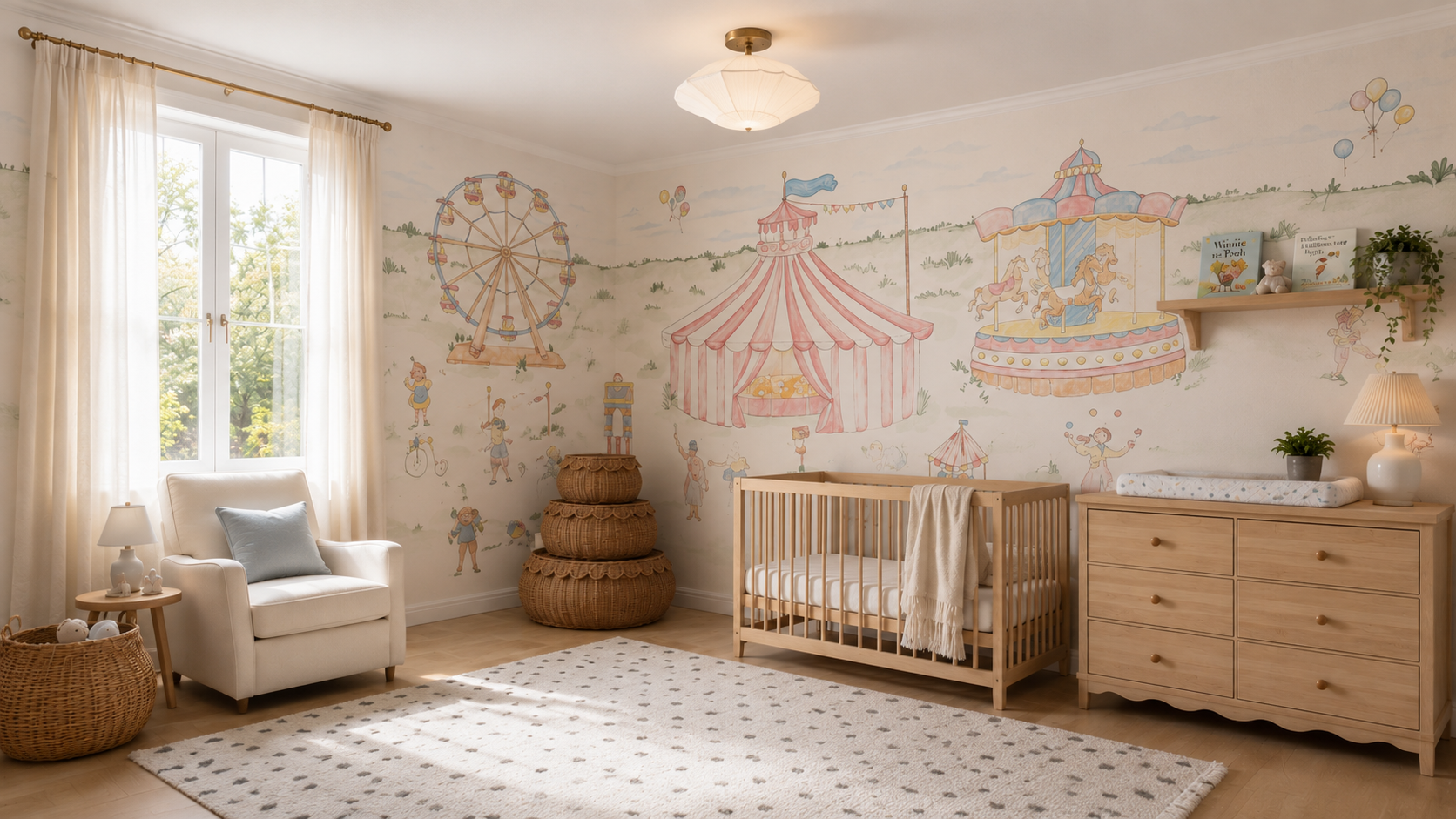
Designing a nursery can feel overwhelming when there are countless themes, color trends, and baby products competing for attention. A timeless nursery takes a quieter approach. Instead of building the room around one temporary trend, it focuses on classic furniture, soft colors, natural textures, practical storage, and meaningful decorative details.
The result is a space that feels peaceful during the newborn stage and can continue evolving as your baby becomes a toddler and young child. You do not need to purchase every item at once. Begin with the essentials, establish a consistent color palette, and gradually add the finishing touches that make the room feel personal.
Below are twelve timeless nursery ideas, along with thoughtfully selected furniture and décor pieces that can help you create a calm, practical, and beautiful baby room.
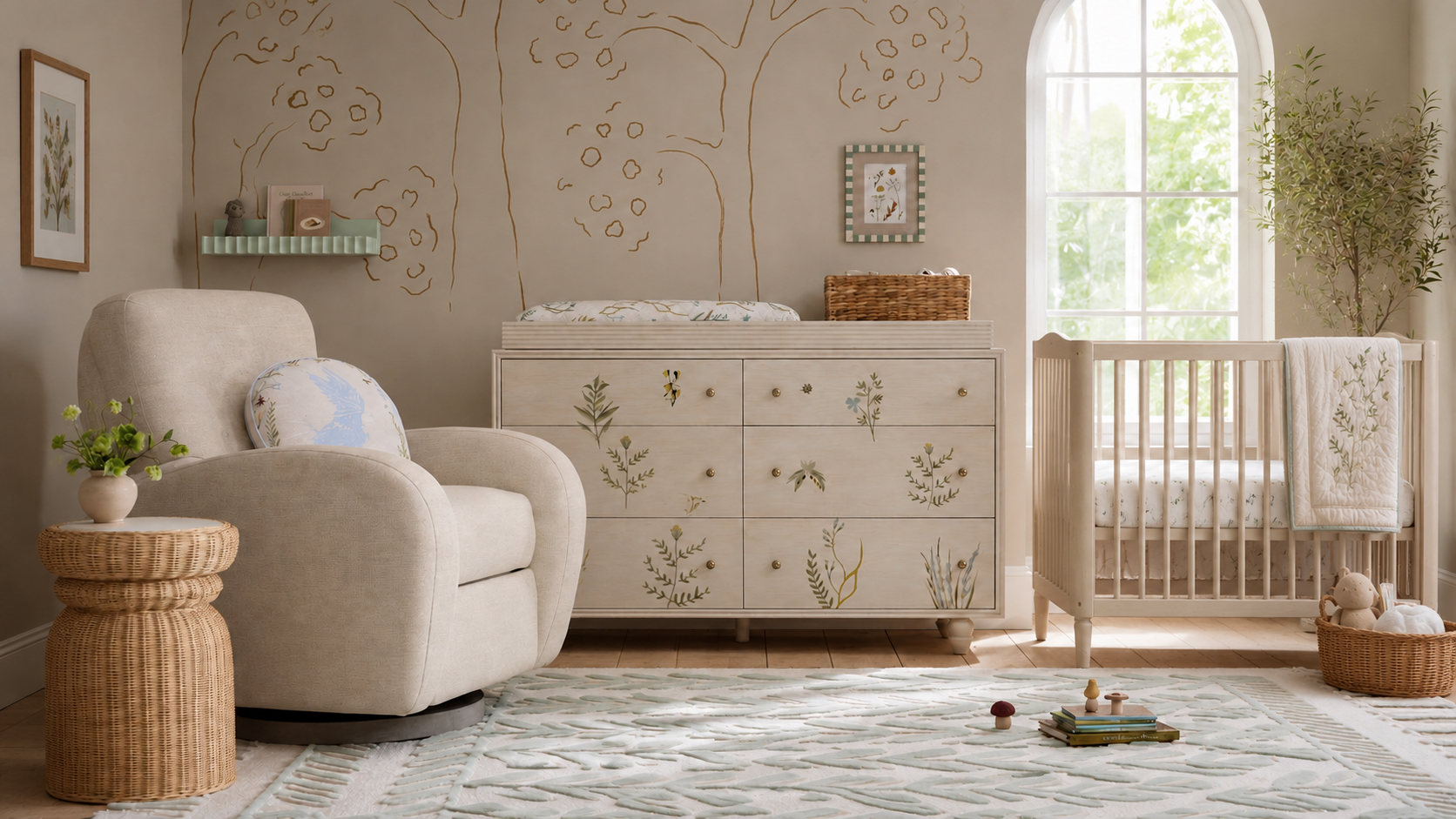
1. Begin With a Simple Nursery Mood Board
Before purchasing furniture or paint, collect a small group of images that represent the atmosphere you want to create.
Your mood board might include:
One primary wall color
One wood finish
One accent color
A wallpaper or textile pattern
A crib style
A lighting reference
Two or three decorative materials
For example, a warm neutral nursery might combine ivory walls, natural oak furniture, muted blue accents, linen curtains, antique-style brass lighting, and botanical artwork.
Try to avoid placing too many unrelated design ideas on the same board. A focused mood board will make it easier to decide whether a product truly belongs in the room before you purchase it.
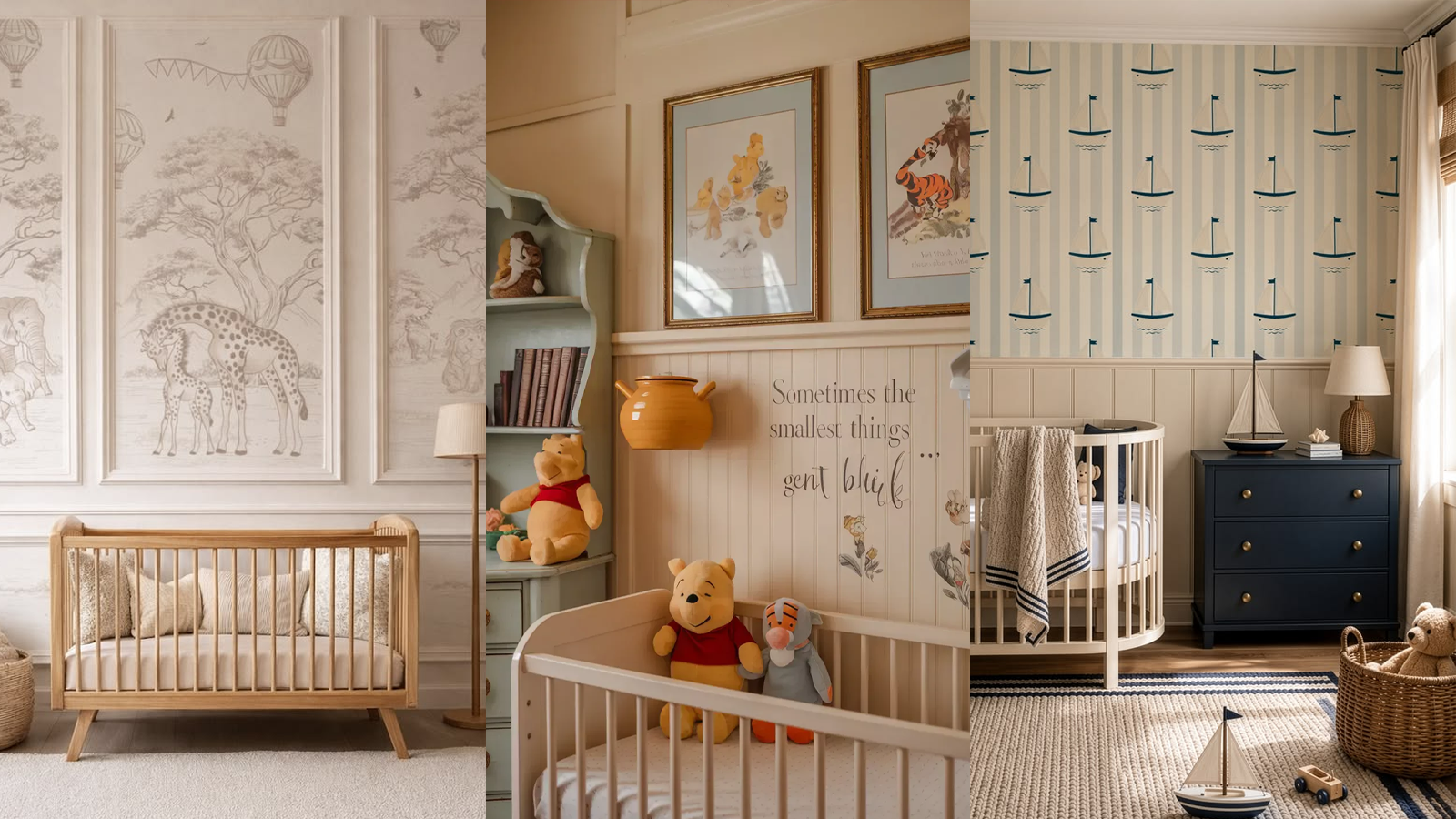
2. Choose a Soft, Lasting Color Palette
Timeless nurseries often begin with a calm, flexible color foundation rather than a highly specific theme. Soft, balanced shades allow the room to evolve as the child grows and make it easier to refresh the space with new artwork, textiles, and accessories.
Warm Neutral
Ivory, oatmeal, natural oak, soft brown, and muted beige create a welcoming palette that works beautifully for boys, girls, and shared spaces.
Soft Blue and Cream
Dusty blue, cream, warm white, and medium-toned wood feel classic and calming without making the nursery appear overly formal.
Sage and Natural Wood
Muted sage pairs naturally with oak furniture, woven baskets, botanical artwork, and soft white textiles. The result feels peaceful, organic, and easy to update.
Blush and Warm Gray
Dusty rose, warm gray, ivory, and antique brass create a romantic nursery that still feels refined and timeless.
Navy and White
Navy accents add structure and contrast to white or cream walls. Use the deeper shade selectively in curtains, rugs, artwork, lamps, or drawer pulls so the room remains light and open.
The Atelier Living recommendation: Use the lightest shade across the largest surfaces, including walls, curtains, rugs, and major furniture pieces. Introduce richer colors through smaller accents that can be changed easily as the room evolves.
A timeless palette does not need to be completely neutral. The goal is to choose colors that feel calm together and can support different décor styles over time.
Featured Pick: Peking Handicraft Goose Hook Pillow — 18 × 18 Inches
The Peking Handicraft Goose Hook Pillow adds a charming, storybook-inspired accent to a softly colored nursery. Its multicolor goose design can bring together shades of cream, dusty blue, sage, blush, warm gray, and natural wood without making the room feel overly themed.
Best for: A nursery reading chair, window seat, storage bench, or decorative corner.
Why it stands out: The hand-hooked texture gives the pillow a warm, crafted appearance, while the playful goose motif adds personality to an otherwise calm and timeless palette. At 18 × 18 inches, it is large enough to create a noticeable accent without overwhelming the room.
Styling idea: Place it on a cream or light-gray glider and repeat one or two colors from the pillow through nearby artwork, curtains, or a small rug.
Consider: This is a decorative pillow and should always remain outside the crib, bassinet, or any infant sleep space. Confirm the current materials, pillow insert, colors, and care instructions in the retailer listing before purchasing.
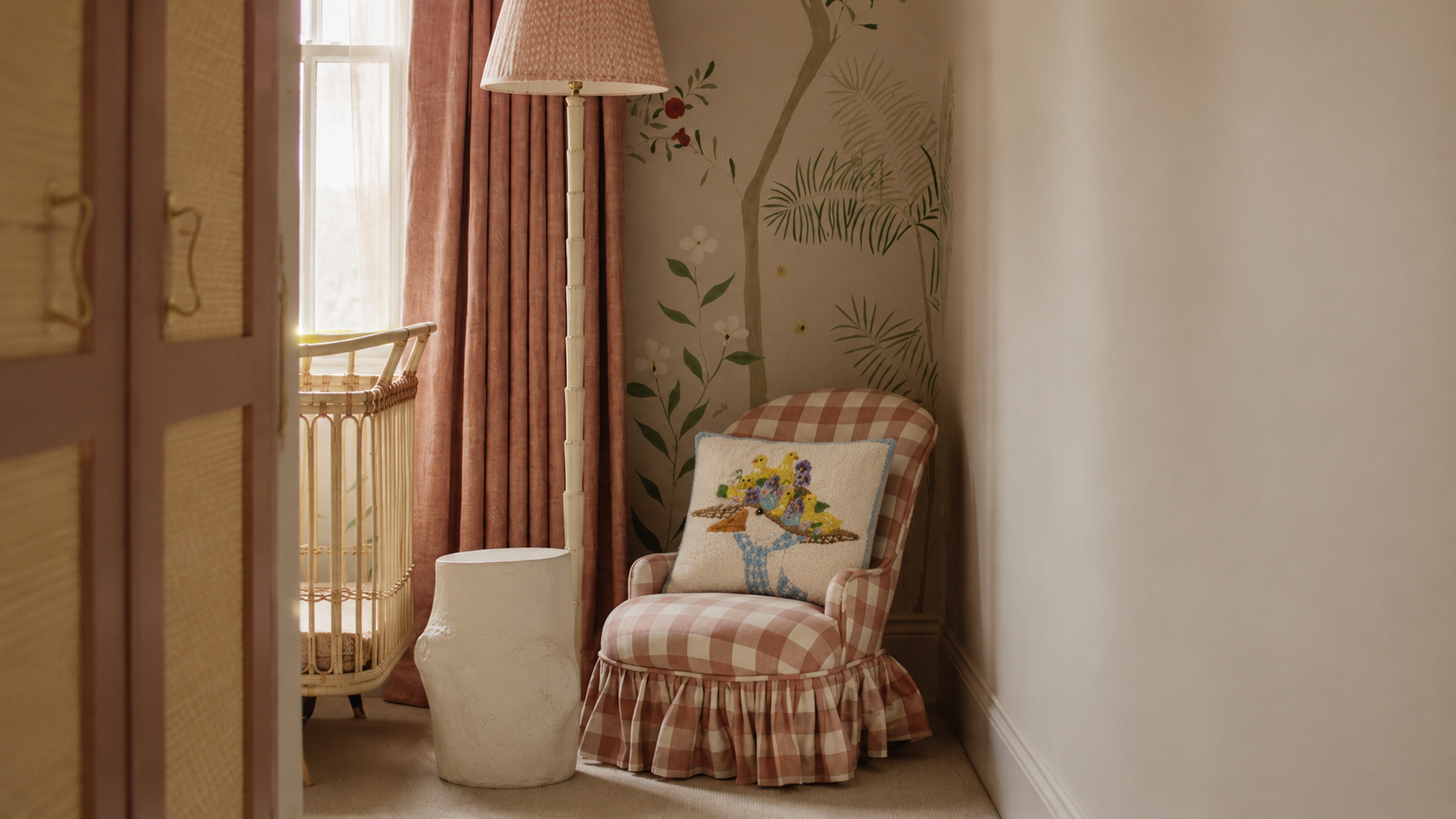
3. Use Wallpaper as a Gentle Focal Point
Wallpaper can give a nursery personality without requiring a large collection of decorative accessories.
Timeless wallpaper styles include:
Small-scale florals
Botanical illustrations
Soft stripes
Classic gingham
Woodland scenes
Delicate animal motifs
Hand-painted landscape murals
Toile-inspired prints
For a balanced look, consider wallpapering one focal wall and painting the remaining walls in a coordinating neutral shade. In a smaller nursery, a delicate or softly colored pattern is usually easier to live with than a very large, high-contrast design.
Peel-and-stick wallpaper may appeal to renters or families who expect to redesign the room later. Traditional wallpaper can feel more permanent and polished, but installation and removal requirements should be considered before purchasing.
Featured Pick: Floralplus Floral Dog Peel-and-Stick Wallpaper
The Floralplus Floral Dog Peel-and-Stick Wallpaper combines a soft floral pattern with playful puppy illustrations, creating a charming focal point for a nursery, children’s bathroom, or playroom. According to the product title, the removable, self-adhesive roll measures approximately 17.5 × 118 inches.
Best for: Families who want a whimsical animal-inspired nursery without using large character graphics or heavily themed décor.
Why it stands out: The combination of florals and small dog illustrations adds personality while still feeling decorative and storybook-inspired. Because the wallpaper is peel-and-stick, it may also be a practical option for renters or rooms that will change as the child grows.
Styling idea: Use it on one accent wall and pair it with warm white paint, natural oak furniture, cream curtains, and soft blush or sage accessories. Keep the remaining décor simple so the pattern remains the focal point.
Consider: This wallpaper is more playful and themed than a neutral botanical print, so it may not feel as timeless as a simple floral or toile design. Measure the wall carefully, check the pattern repeat, and order enough rolls from the same production batch when possible. Review the retailer’s surface-preparation, installation, matching, cleaning, and removal instructions before applying it.
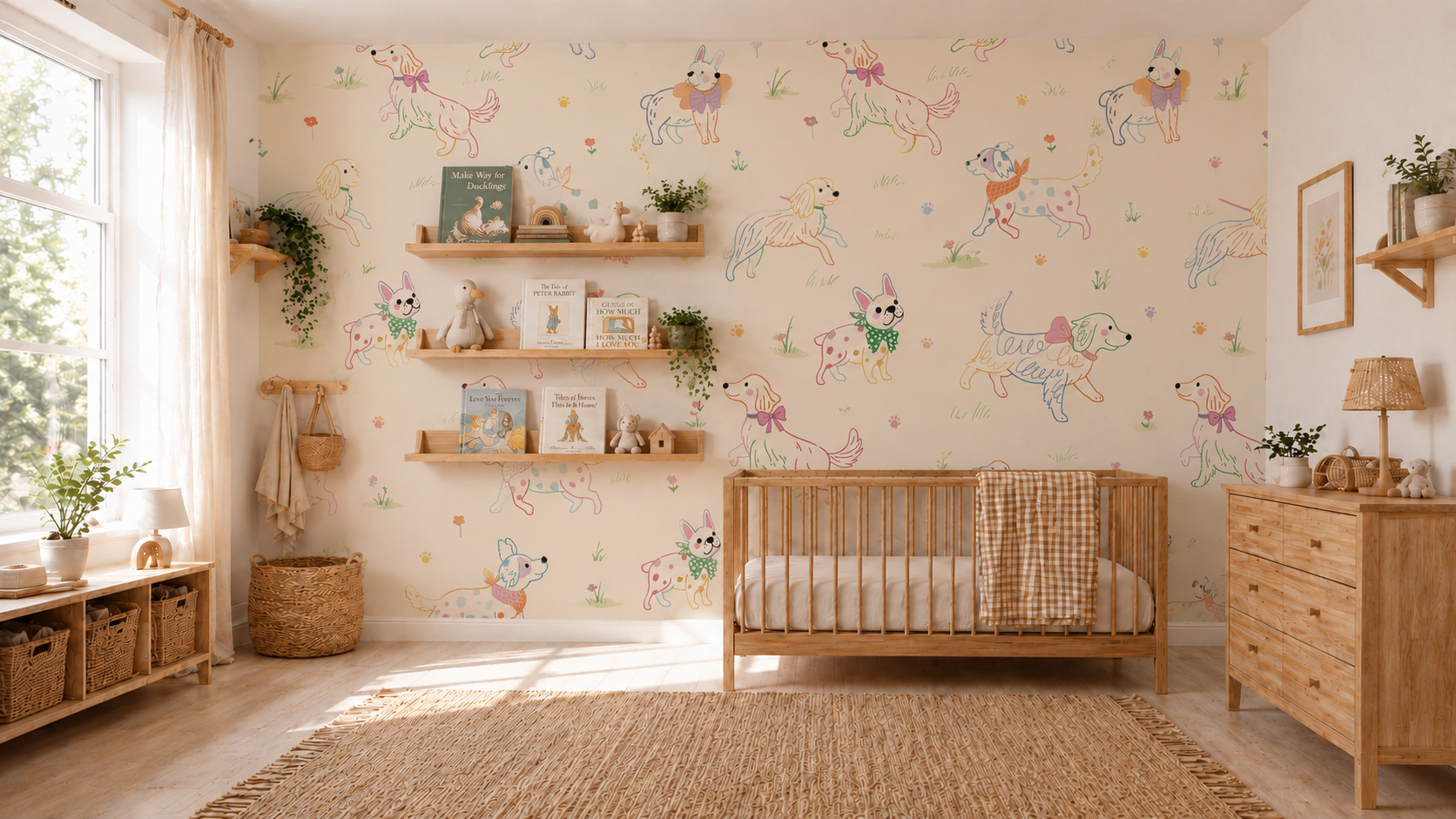
4. Invest in a Classic Sleep Piece
The baby’s primary sleep space often becomes a visual anchor in the nursery, so choose a design that can coordinate with several décor styles and remain useful beyond the earliest months.
Timeless features include:
Simple slatted or open sides
Natural oak, walnut, white, or warm-gray finishes
Minimal decorative detailing
Rounded or softly shaped corners
Convertible or multipurpose construction
A design that works with neutral nursery textiles
A simple wood sleep piece can complement coastal, traditional, botanical, neutral-modern, and transitional nurseries simply by changing the surrounding artwork, rug, curtains, and accessories.
The Atelier Living recommendation: Prioritize a stable, well-proportioned design over highly decorative details. Use only the mattress supplied or approved by the manufacturer, and keep the sleep surface firm, flat, and free of loose bedding.
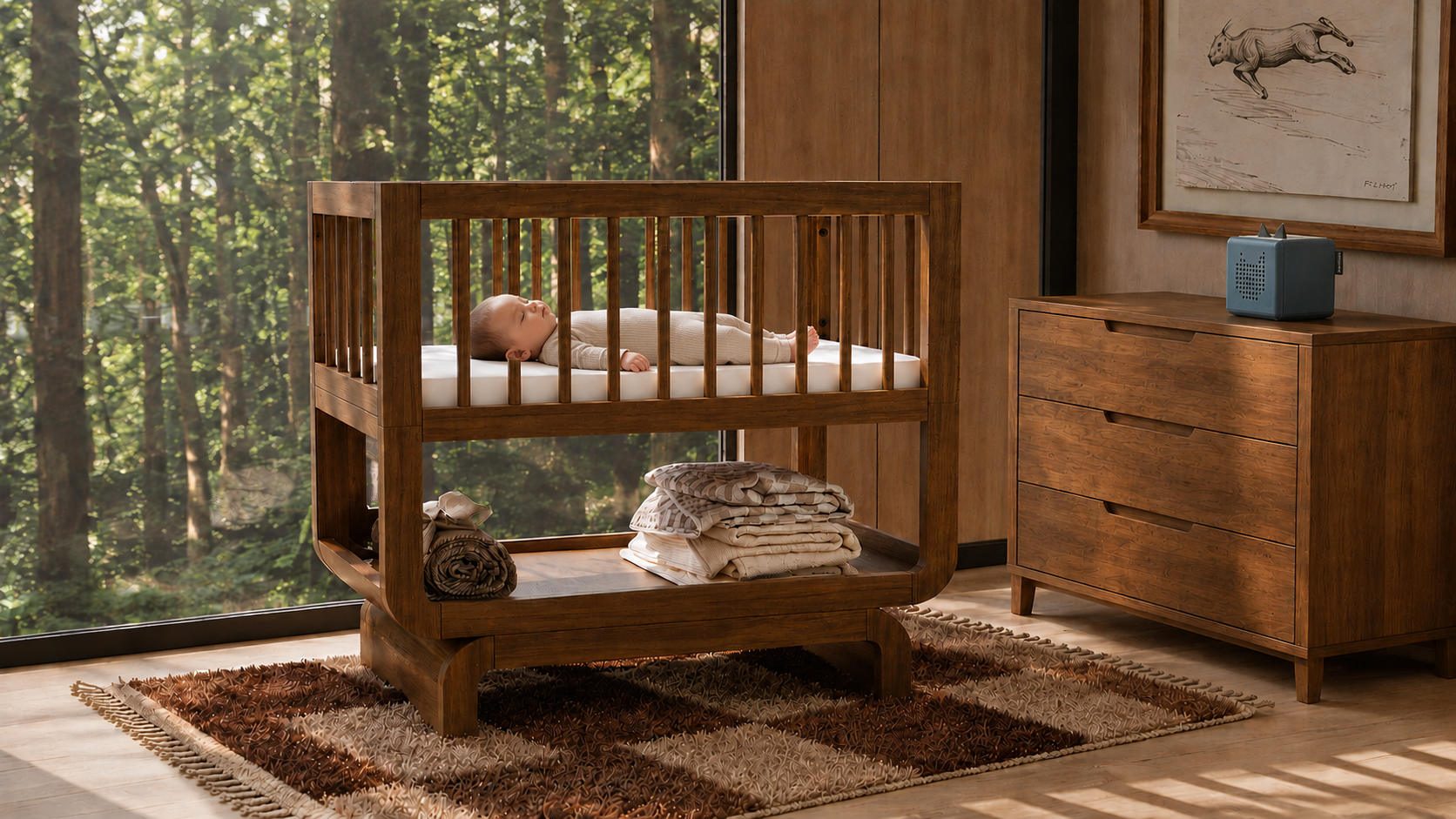
Featured Pick: Storkcraft Santorini Deluxe 3-in-1 Convertible Bassinet — Hazelnut
The Storkcraft Santorini Deluxe 3-in-1 Convertible Bassinet in Hazelnut combines a warm wood finish with a softly shaped, furniture-inspired design. According to the product title, it includes a water-resistant mattress and converts into a toy box and bookcase after the bassinet stage.
Best for: Families looking for a refined newborn bassinet that can continue serving the nursery as storage furniture later.
Why it stands out: The hazelnut finish gives the bassinet a timeless appearance that pairs well with cream textiles, natural baskets, muted wallpaper, and warm neutral color palettes. Its convertible design also gives it more long-term value than a bassinet used only during the newborn months.
Consider: This product is a bassinet rather than a full-size crib, so it has a shorter sleep-use period. Confirm its current dimensions, mattress specifications, age and weight limits, conversion instructions, included components, and guidance for discontinuing bassinet use. Keep the sleep area free of pillows, bumpers, blankets, toys, and added mattresses.
5. Pair the Crib With a Long-Term Dresser
A nursery dresser can serve as clothing storage, diaper organization, and a changing surface during the early years. Choosing a design that still feels appropriate after the changing pad is removed gives the room more long-term value.
Classic dresser options include:
Natural oak or warm walnut finishes
White beadboard or paneled drawer fronts
Soft gray or muted painted wood
Subtle scalloped detailing
Simple brass or dark bronze hardware
Rounded wooden knobs
A wide dresser is often more practical than a nursery-specific changing table because it can continue storing clothing, books, blankets, and toys as the child grows.
The Atelier Living recommendation: Choose a dresser with generous drawer space, a stable top, and a finish that coordinates with the crib without matching it too perfectly. A slightly layered look often feels more timeless than a complete furniture set.
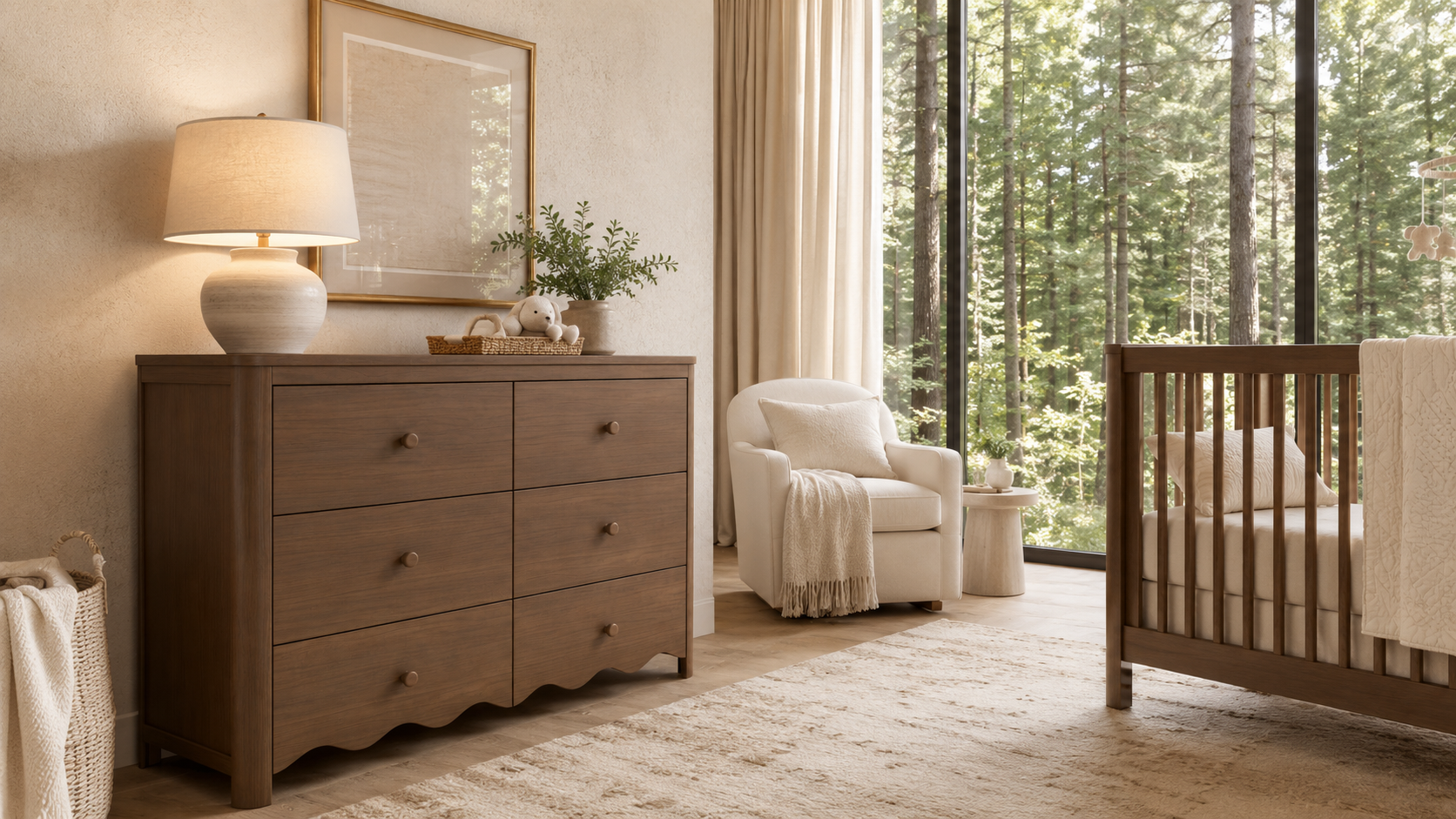
Featured Pick: Storkcraft Casablanca 6-Drawer Dresser — Hazelnut
The Storkcraft Casablanca 6-Drawer Dresser in Hazelnut offers substantial nursery storage in a warm wood finish that can transition easily into a child’s bedroom. Its classic silhouette and neutral brown tone coordinate naturally with cream textiles, botanical wallpaper, woven baskets, and traditional or transitional nursery décor.
Best for: Families looking for one spacious dresser that can support both nursery organization and long-term bedroom storage.
Why it stands out: Six drawers provide room for clothing, blankets, diapers, and everyday accessories, reducing the need for additional storage furniture. According to the product title, it also includes safety interlocking drawers, which are designed to help limit how many drawers can be opened at one time.
Consider: This product is sold as a dresser rather than a dedicated changing table. Confirm the top dimensions and weight capacity before adding a changing pad, and use only a pad that fits securely without extending beyond the dresser. Anchor the dresser to the wall using the manufacturer’s anti-tip hardware and follow all current assembly and safety instructions.
6. Add a Comfortable, Classic Glider
A nursery chair should be chosen for comfort before appearance. Feeding, soothing, reading, and quiet bonding sessions can make it one of the most frequently used pieces in the room.
Look for:
Supportive arms
A comfortable seat depth
A high or supportive back
Smooth gliding or rocking movement
Durable, easy-to-clean upholstery
Enough clearance to recline and swivel safely
A neutral fabric that can transition beyond the nursery
Cream, oatmeal, soft gray, pale blue, muted green, warm taupe, and subtle gingham are easy to coordinate with changing nursery décor.
The Atelier Living recommendation: Choose a chair with a simple silhouette and upholstery you would also use in a bedroom, reading corner, or family room. Measure the full width, depth, and required reclining clearance before ordering.
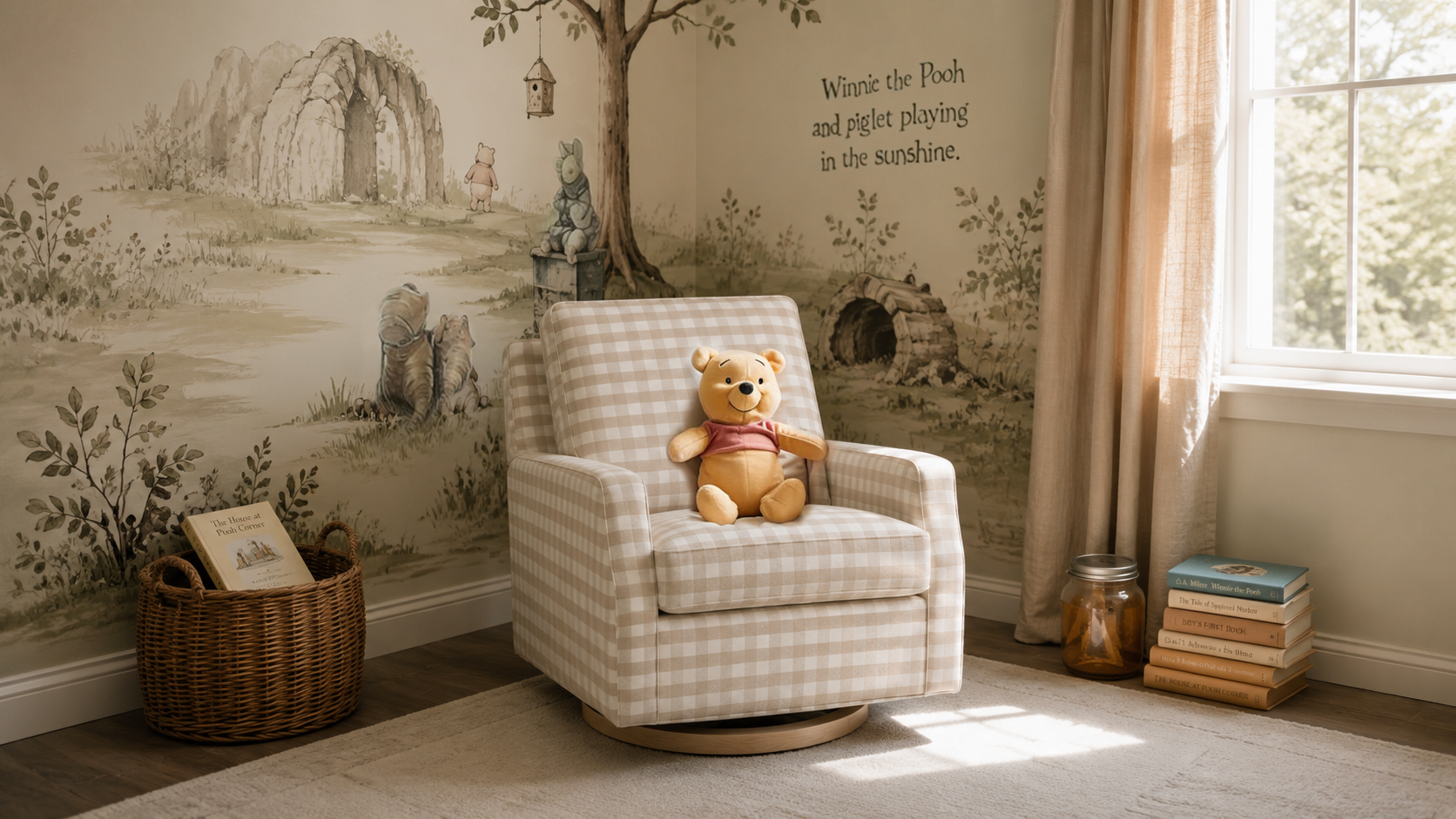
Featured Pick: Namesake Crewe Nursery Glider Recliner — Tan Gingham
The Namesake Crewe Nursery Glider Recliner in Tan Gingham combines a softly patterned upholstery with gliding, rocking, reclining, and 360-degree swivel functions. The neutral gingham design gives the chair a classic nursery feel while remaining subtle enough to work in traditional, cottage-inspired, coastal, or transitional interiors.
Best for: Parents looking for a comfortable nursery chair that can support feeding, soothing, reading, and everyday relaxation.
Why it stands out: The combination of swivel, glide, and manual recline provides several seating positions in one chair. The tan gingham fabric introduces gentle pattern without overwhelming the room, while the classic silhouette can continue working outside the nursery as the child grows.
Consider: Confirm the current assembled dimensions, seat depth, back height, weight capacity, upholstery materials, cleaning instructions, and reclining clearance before purchasing. Make sure the chair has enough room to swivel and recline without striking the crib, dresser, wall, or nearby furniture.
7. Layer the Nursery Lighting
One ceiling fixture is rarely enough to support every nursery routine. Layered lighting makes the room feel warmer and allows parents to adjust the brightness for daytime organization, nighttime feeding, diaper changes, and bedtime reading.
Consider combining:
A ceiling fixture for general lighting
A table lamp near the dresser
A floor lamp beside the glider
A dim night-light for overnight routines
Blackout curtains or shades for daytime naps
Choose fixtures that provide soft, comfortable illumination rather than harsh glare. Warm metal finishes, ceramic bases, white glass, pleated shades, and simple wood details can all contribute to a calm, timeless nursery.
The Atelier Living recommendation: Use the ceiling fixture as the room’s main light, then add one or two smaller lamps for softer evening illumination. Whenever possible, select dimmable fixtures or compatible dimmer controls.
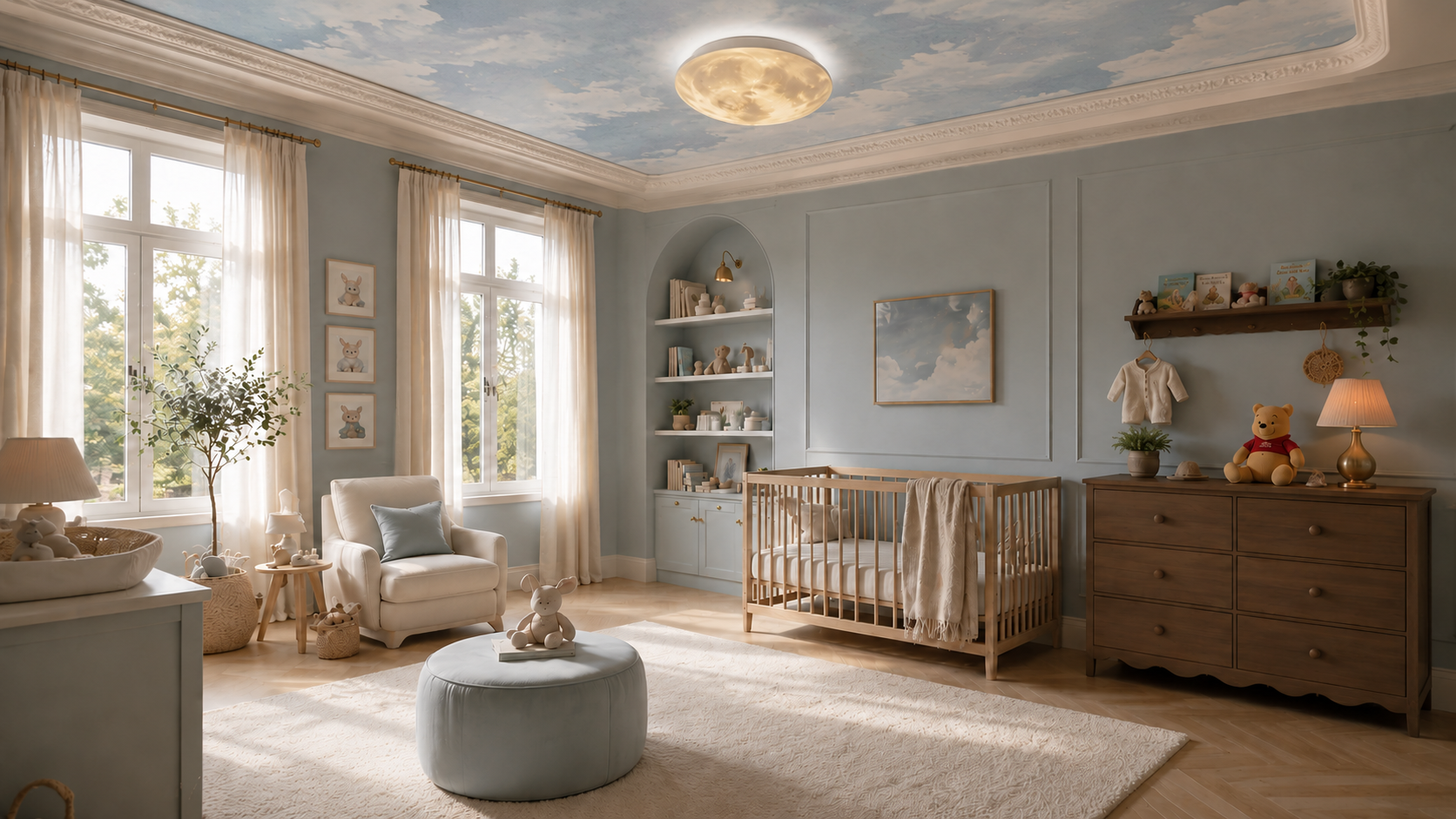
Featured Pick: 15-Inch 3D Moon-Surface Flush-Mount Ceiling Light
This 15-inch flush-mount ceiling light features a dimensional moon-inspired surface designed to create a gentle celestial focal point. According to the product title, it includes an integrated 30-watt LED and five adjustable color-temperature settings.
Best for: Nurseries, children’s bedrooms, or reading spaces that need a compact overhead fixture with a subtle celestial theme.
Why it stands out: The flush-mount design does not extend far into the room, making it practical for smaller nurseries or rooms with lower ceilings. Its adjustable color-temperature settings may also allow families to select warmer light for evening routines and brighter light for daytime organization.
Styling idea: Pair the moon fixture with warm white walls, natural oak furniture, cream textiles, and small celestial details rather than creating a heavily themed room. This will help the nursery remain calm and adaptable as the child grows.
Consider: A moon-shaped fixture feels more decorative and theme-specific than a simple white-glass or brass ceiling light. Confirm the current dimensions, brightness, color-temperature options, dimmer compatibility, installation requirements, electrical certification, and whether the LED component can be replaced. Have it installed according to the manufacturer’s instructions and applicable electrical requirements.
8. Use Woven Baskets and Closed Storage
Timeless nurseries feel calm and organized because everyday products have designated places. Combining concealed storage with a small amount of attractive open storage keeps essentials accessible without making the room feel cluttered.
Consider using:
Dresser drawers for clothing and diapers
Woven baskets for blankets, books, and toys
Lidded boxes for backup supplies
A portable caddy for frequently used diapering products
Wall shelves for lightweight books and décor
Manufacturer-approved under-crib storage
Natural materials such as seagrass, rattan, cotton rope, canvas, and light wood add warmth and texture without introducing unnecessary color.
The Atelier Living recommendation: Choose baskets with lids for items you prefer to keep out of sight, and use open baskets only for products you reach for regularly. Select coordinating shapes and finishes so the storage feels like part of the room’s design.
Featured Pick: BEBE BASK Large Scalloped Storage Basket Set — Mocca
The BEBE BASK Large Scalloped Basket Set in Mocca includes three handwoven storage baskets with decorative scalloped edges and lids. The warm woven finish adds texture to a neutral nursery while helping conceal blankets, toys, books, clothing, and backup supplies.
Best for: Families looking for decorative storage that can remain visible in the nursery, bedroom, playroom, bathroom, or closet.
Why it stands out: The coordinated three-piece set creates a more polished appearance than a collection of mismatched bins. The scalloped detailing adds a gentle decorative element, while the lids keep everyday clutter out of view. The baskets can also transition into other rooms as the child grows.
Consider: The product title references dimensions of approximately 22 × 16 × 10 inches, but confirm whether these measurements apply to the largest basket or the complete set. Review the individual basket sizes, materials, lining, handle construction, weight capacity, and cleaning instructions before purchasing. Keep heavy items in lower baskets and avoid placing large storage baskets where a child could climb on or pull them over.
9. Select Window Treatments That Feel Soft and Practical
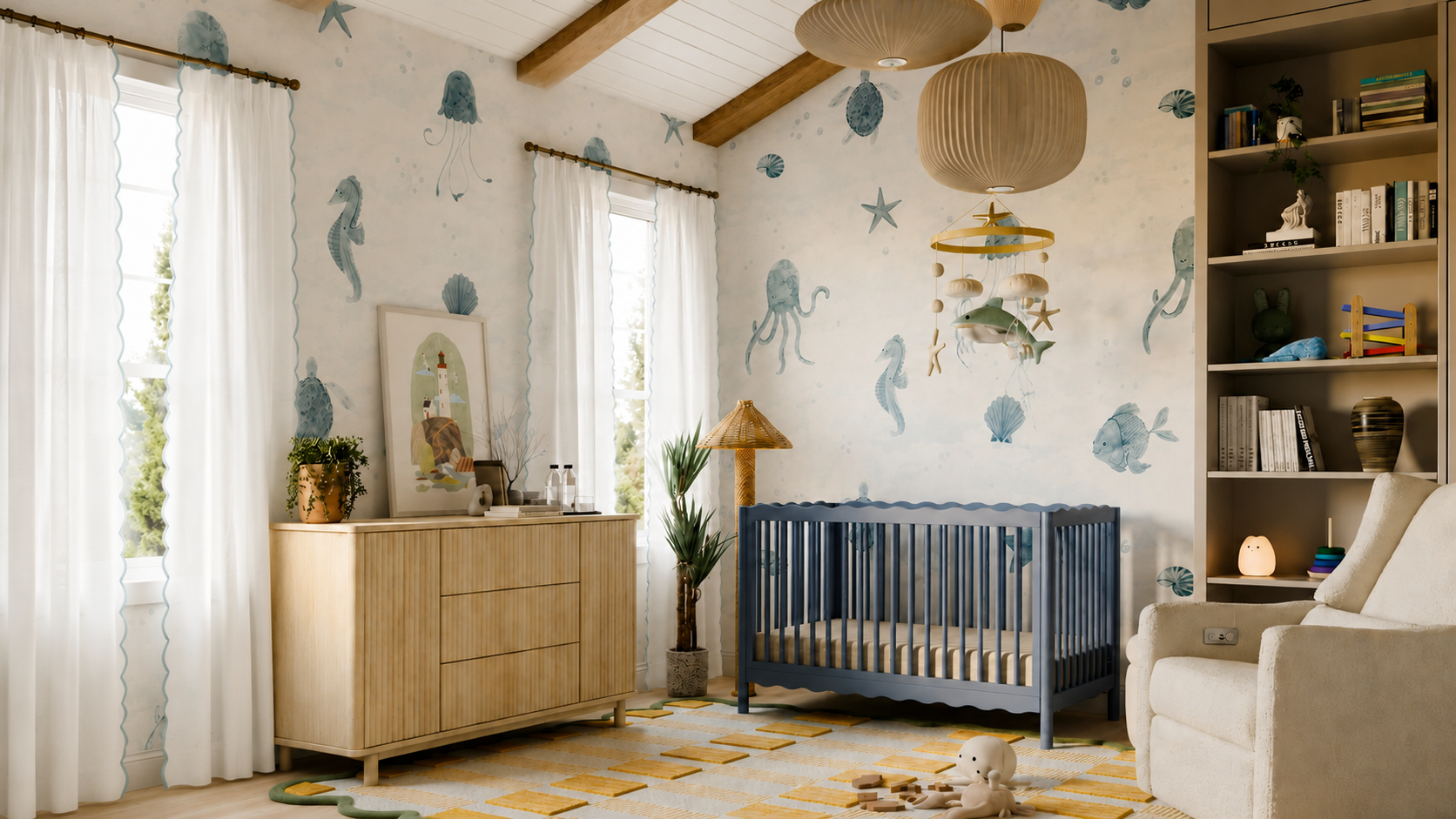
Window treatments influence both the appearance and function of the nursery.
A timeless combination often includes:
A blackout shade or lined curtain
A soft linen-look outer panel
A simple rod in brass, bronze, black, or wood
Floor-length curtains installed securely
A neutral or subtle patterned fabric
Cream, ivory, pale blue, sage, warm gray, and small-scale gingham can all work beautifully.
Avoid highly complicated layers in a small room. One practical blackout layer paired with one decorative outer layer is often enough.
Featured Pick: Linen-Look Blackout Nursery Curtains
Linen-look blackout curtains create a soft, tailored appearance while helping the nursery feel more finished.
Best for: Families who want practical light control without using heavy or overly formal drapery.
Why it stands out: The woven appearance adds texture while a neutral color can coordinate with wallpaper, rugs, and furniture.
Consider: Confirm the panel dimensions, opacity level, hanging style, fabric composition, and cleaning instructions. Install all curtain hardware securely and keep cords inaccessible.
10. Create a Small Reading Corner
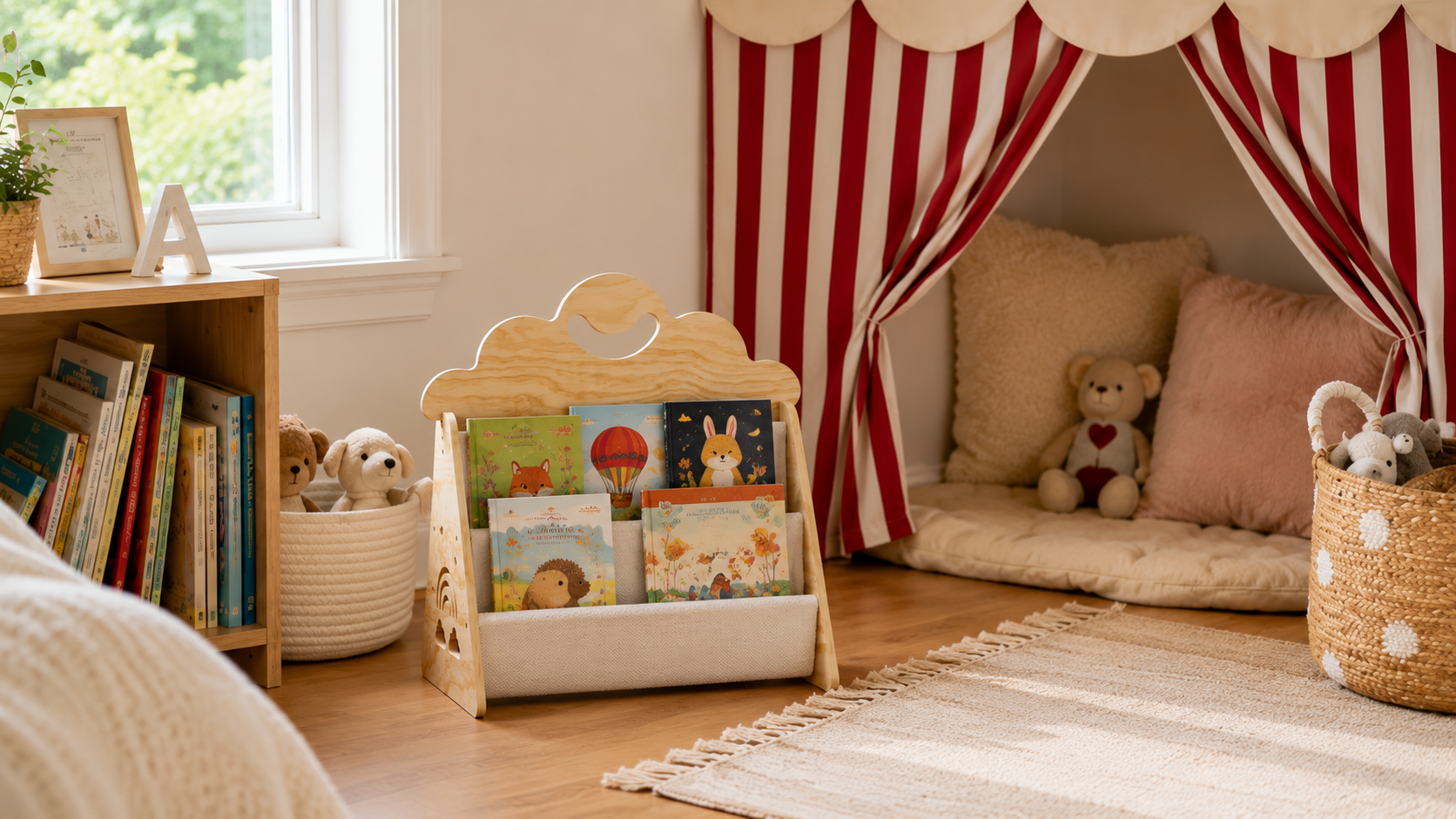
A nursery reading corner does not require a large bookcase or a separate room. A comfortable chair, a small collection of books, and compact storage can create an inviting place for bedtime stories and quiet bonding.
A simple setup may include:
The nursery glider
A slim bookshelf or wall-mounted picture ledge
A small book basket
A floor lamp
One soft rug
A compact side table
Display only a few books at a time and rotate them as the baby grows. Front-facing storage makes book covers easier to see and allows the collection to become part of the room’s décor.
The Atelier Living recommendation: Keep the reading corner visually simple. Choose one narrow storage piece and leave enough open floor space for comfortable movement.
Featured Pick: Wooden Montessori Kids Bookshelf
This wooden Montessori-style bookshelf offers accessible book storage for nurseries, toddler rooms, playrooms, and classrooms. Its front-facing design helps keep book covers visible, making it easier for children to notice and eventually choose books independently.
Best for: Small reading corners and nurseries that need organized book storage without a large traditional bookcase.
Why it stands out: The compact, child-accessible design can hold a curated selection of board books while keeping the covers on display. Its natural wood appearance also coordinates easily with neutral, Scandinavian, Montessori-inspired, and modern nursery interiors.
Consider: This product is a floor-standing bookshelf rather than a wall-mounted ledge. Confirm the assembled dimensions, shelf depth, material, weight capacity, included hardware, and recommended age range before purchasing. Secure it according to the manufacturer’s anti-tip instructions and keep it positioned away from the crib and changing area.
Explore additional storage ideas in Baby Essentials for Small Spaces.
11. Decorate With Art That Can Grow With the Child
Nursery artwork does not need to rely on cartoon characters or baby-specific phrases. Choosing softer, more timeless subjects allows the wall décor to remain appropriate as the nursery transitions into a toddler or child’s room.
Timeless artwork ideas include:
Botanical drawings
Animal sketches
Coastal landscapes
Vintage-style maps
Family photographs
Small floral studies
Abstract line art
Framed textiles
Personalized name art used sparingly
A coordinated set of two or three pieces usually feels more intentional than a collection of unrelated decorations. Choose simple frames or finishes in natural wood, antique brass, black, white, or warm brown, and leave enough open wall space for the room to feel calm.
The Atelier Living recommendation: Select artwork that complements the nursery palette rather than matching a temporary theme too precisely. Animal, botanical, and landscape pieces can continue working as the child grows.
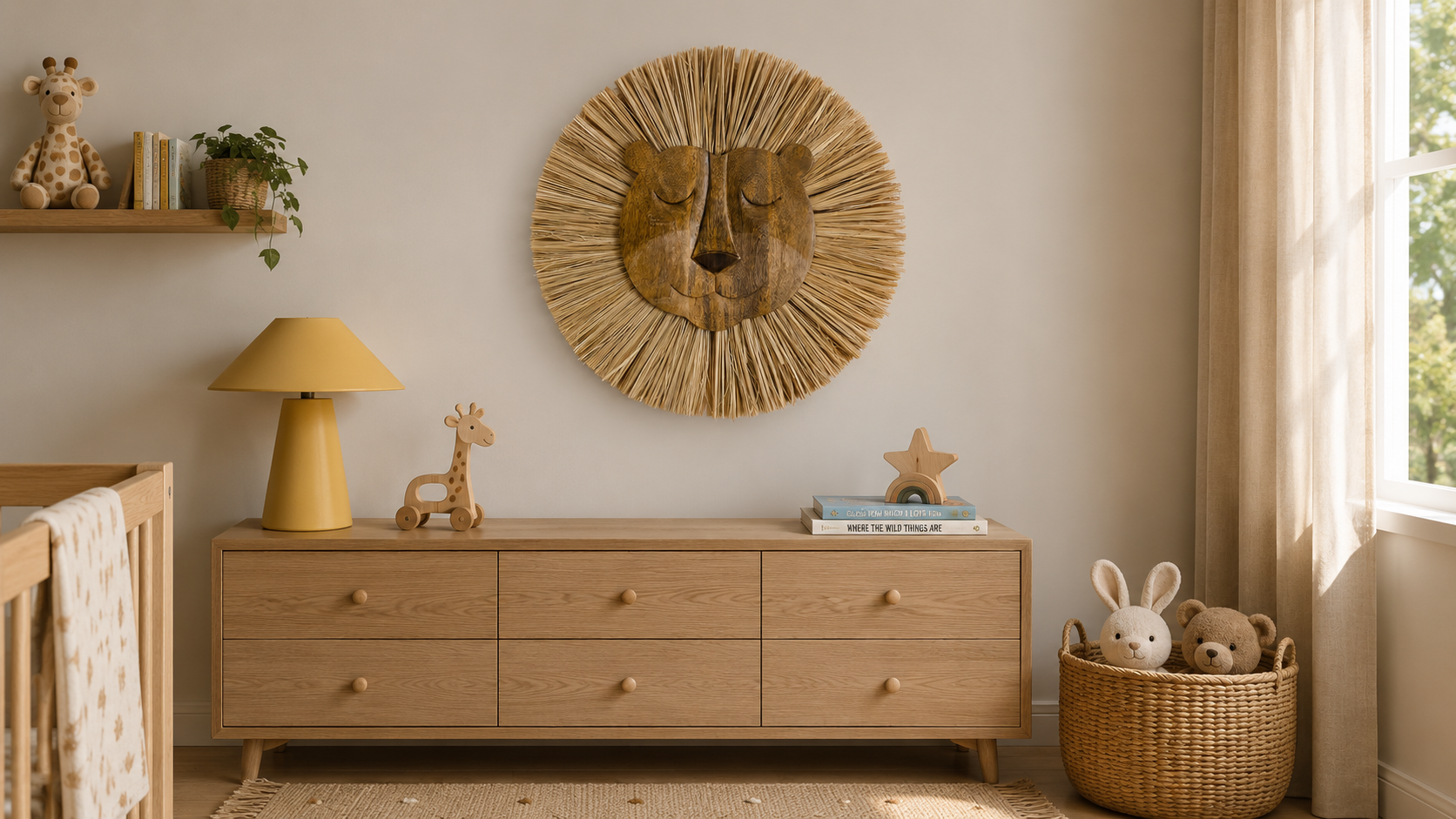
Featured Pick: Crane Baby Handmade Wood Lion Safari Wall Art — Brown
The Crane Baby Handmade Wood Lion Safari Wall Art adds warmth and personality to a nursery through natural materials and a softly styled animal motif. According to the product title, the piece measures approximately 21 × 21 inches and features a brown wood finish suitable for boho, safari, woodland, and neutral nursery interiors.
Best for: Families creating a nature-inspired, jungle, bohemian, or warm-neutral nursery for a baby boy or girl.
Why it stands out: The sculptural wood design adds texture and dimension without relying on bright colors or baby-specific wording. Its neutral lion motif can also transition into a toddler bedroom, playroom, or reading corner as the child grows.
Styling idea: Display it above a low bookshelf, reading bench, or dresser and pair it with natural oak furniture, woven baskets, cream textiles, and muted sage or warm-brown accents.
Consider: At approximately 21 inches square, this is a substantial wall piece, so measure the intended area before ordering. Confirm the current materials, weight, finish, hanging hardware, and care instructions in the retailer listing. Install it securely using hardware appropriate for the wall type, and position it away from the crib, changing surface, or anywhere it could fall within a child’s reach.
12. Finish the Room With Soft, Easy-Clean Surfaces
Textiles help a neutral nursery feel warm, comfortable, and complete. Layering a few practical fabrics can soften hard surfaces while keeping the room easy to maintain.
Consider adding:
A washable rug or cushioned floor mat
Two fitted crib sheets
A lightweight throw for the adult chair
A removable changing-pad cover
Simple curtain panels
One decorative pillow used only on the adult chair
A storage basket lined with washable fabric
Mixing cotton, linen-look fabric, muslin, subtle knits, and low-pile textures can make the room feel layered without relying on strong colors.
Keep the crib itself simple and follow current manufacturer and pediatric guidance regarding what belongs in an infant sleep space.
Featured Pick: 16-Piece Fluffy Interlocking EVA Foam Tile Mat — White
This 16-piece interlocking floor-mat set combines cushioned EVA foam tiles with a soft, shaggy surface. According to the product title, the tiles are approximately 0.6 inches thick and can cover up to about 11.8 square feet, creating a soft area for a nursery, bedroom, or supervised play corner.
Best for: Families who want a small cushioned floor area beside a reading chair, toy shelf, or supervised play space.
Why it stands out: The interlocking design allows the mat to be arranged according to the available floor space and taken apart for storage or cleaning. The white finish can coordinate easily with neutral furniture, natural wood, soft wallpaper, and pastel nursery accents.
Consider: This product is a modular foam mat rather than a traditional washable area rug. Confirm the exact tile dimensions, total coverage, cleaning method, backing, edge pieces, material certifications, and manufacturer age guidance before purchasing. Check regularly for loose fibers, lifted corners, separated tiles, or damaged foam, and discontinue use if any pieces become detachable.
Use the mat only for awake, supervised floor play. Keep it out of the crib or bassinet, and place it on a clean, dry surface where it will not create a tripping hazard.
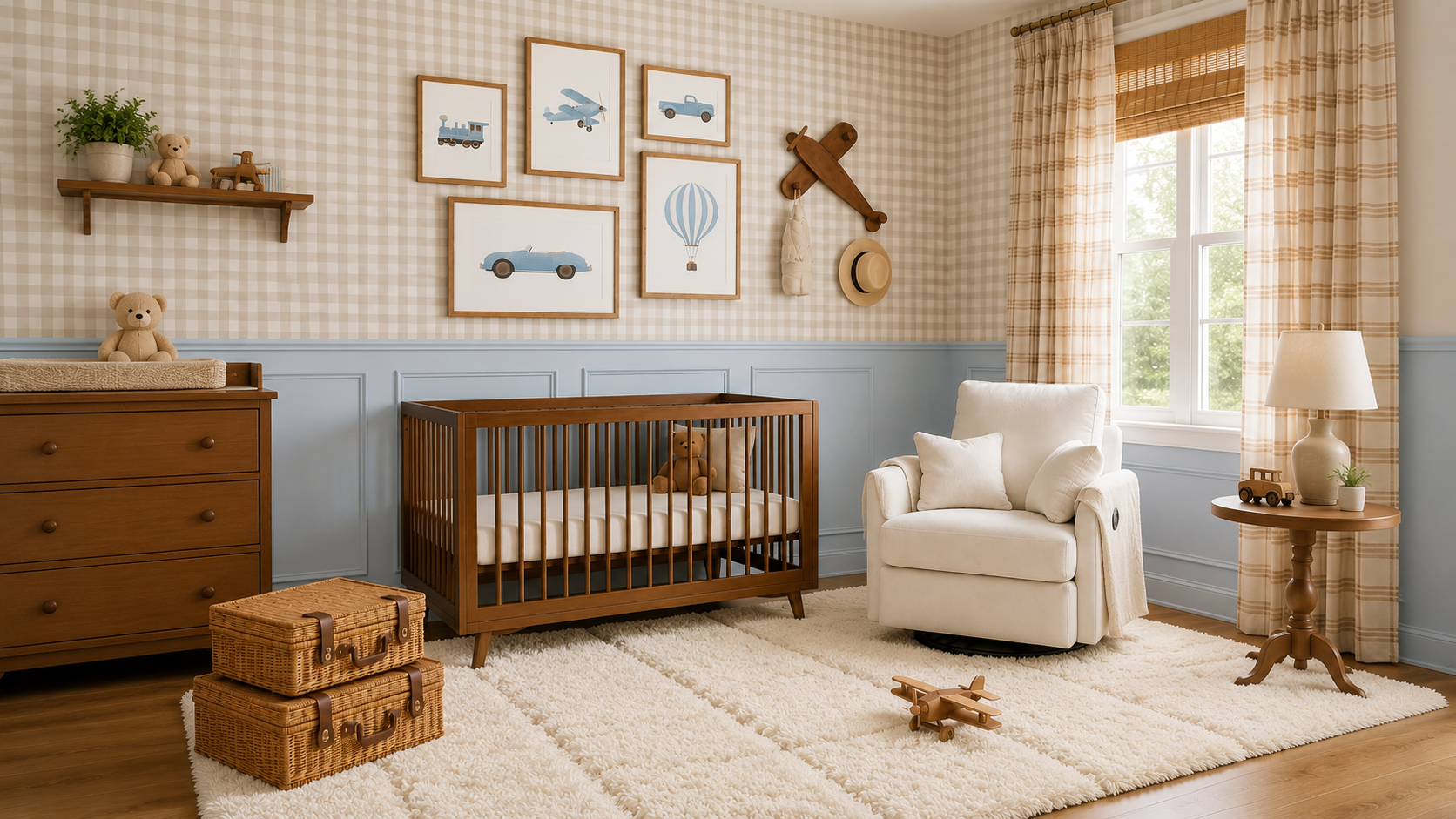
How to Keep a Nursery Looking Timeless
A timeless nursery does not need to feel plain. The goal is to create a flexible foundation and add personality through items that are easy to update.
Keep the largest purchases simple:
Crib
Dresser
Glider
Rug
Curtains
Add character through smaller details:
Artwork
Baskets
Books
Crib sheets
Lamps
Decorative objects
Wallpaper
This approach makes it easier to refresh the room without replacing all of the furniture.
A Simple Timeless Nursery Checklist
Before purchasing a nursery product, ask:
Does it coordinate with the main color palette?
Avoid introducing a completely new color through every purchase.
Will it still look appropriate in several years?
Furniture with a simple silhouette usually offers more flexibility.
Is it practical for everyday routines?
A beautiful product should also be easy to clean, access, move, or store.
Does it add function or only decoration?
In smaller rooms, prioritize products that support sleep, changing, feeding, reading, or organization.
Does the room still have open space?
A timeless nursery should feel calm rather than completely filled.
Final Thoughts
The most beautiful nurseries are not always the rooms with the most products. A timeless nursery is created through thoughtful editing: one classic crib, one practical dresser, a comfortable chair, layered lighting, useful storage, and a restrained color palette.
Begin with a strong foundation and allow the room to evolve gradually. Natural wood, warm neutrals, soft textiles, classic wallpaper, and meaningful artwork can create a nursery that feels comforting during the newborn stage and remains beautiful as your child grows.
For more practical nursery planning, read Baby Essentials for Small Spaces and 15 Newborn Essentials You’ll Actually Use.